

I had the opportunity to tour IDEAL Electrical in Ajax, Ontario during my full-day workshop at the Tools in the Trades Bootcamp by Supporting Ontario Youth.
Right before lunch, our helpful and friendly hosts gave us a tour around their workplace. This location of IDEAL Electrical is a manufacturing plant for wire connectors.
Signature product: Can-Twist® Wire Connectors
IDEAL’s main product is the twisting wire nut connector. Condo builders are amongst their biggest customers. You can order them in their regular size of 25,000 connectors or their “stubby” bin, which contains only 7,500 connectors.
The twisting wire connectors are manufactured on-site using plastic, steel wire, and various chemicals. There are quite a few steps involved in producing these, but to simplify it, these are the ones I’ll go over:
- The plastic is molded
- The spring is made and inserted into the plastic wire nut mold
Below are some photos I took during the site visit.
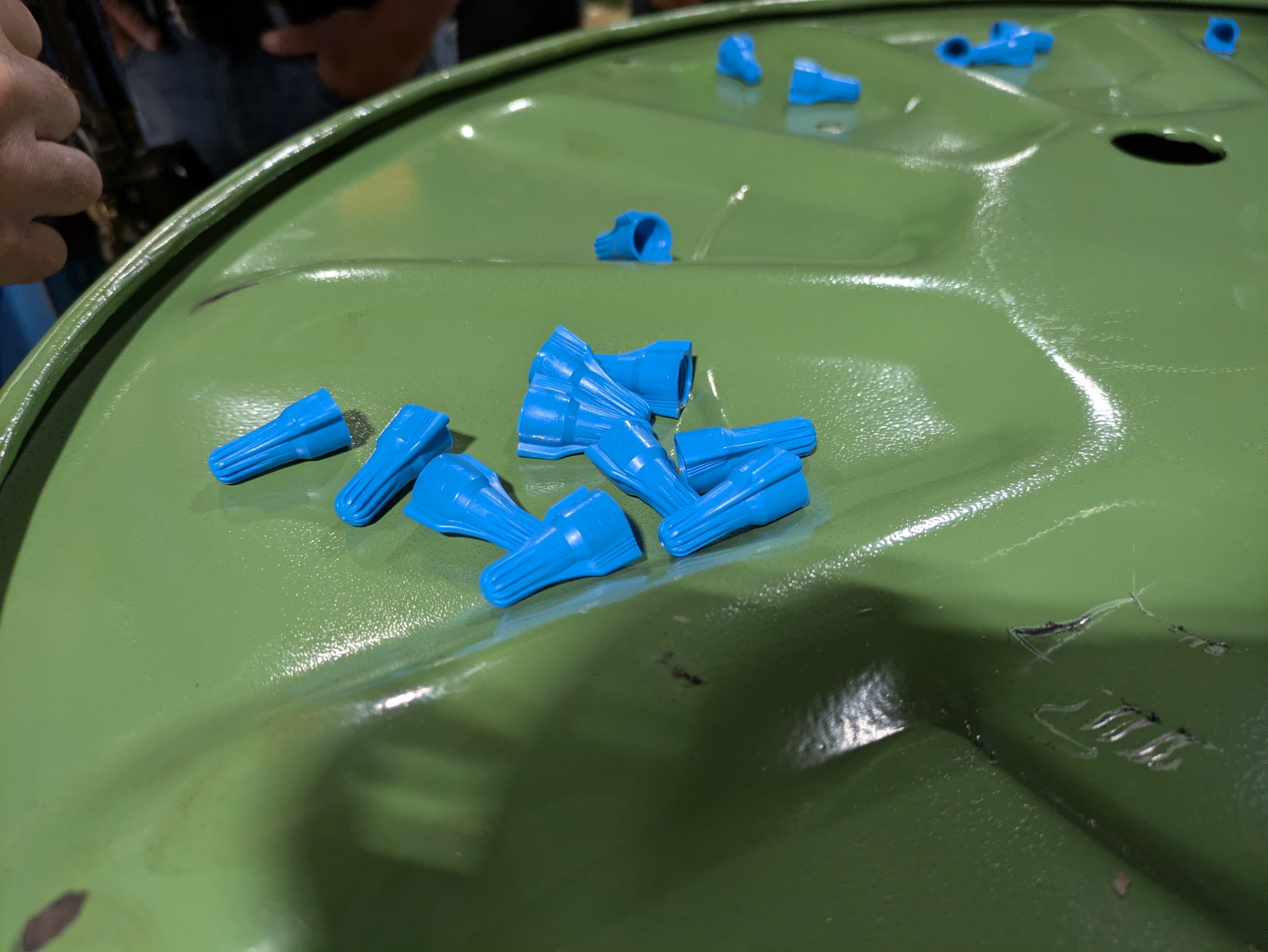
Blue twisting wire nut connectors, still warm after being molded
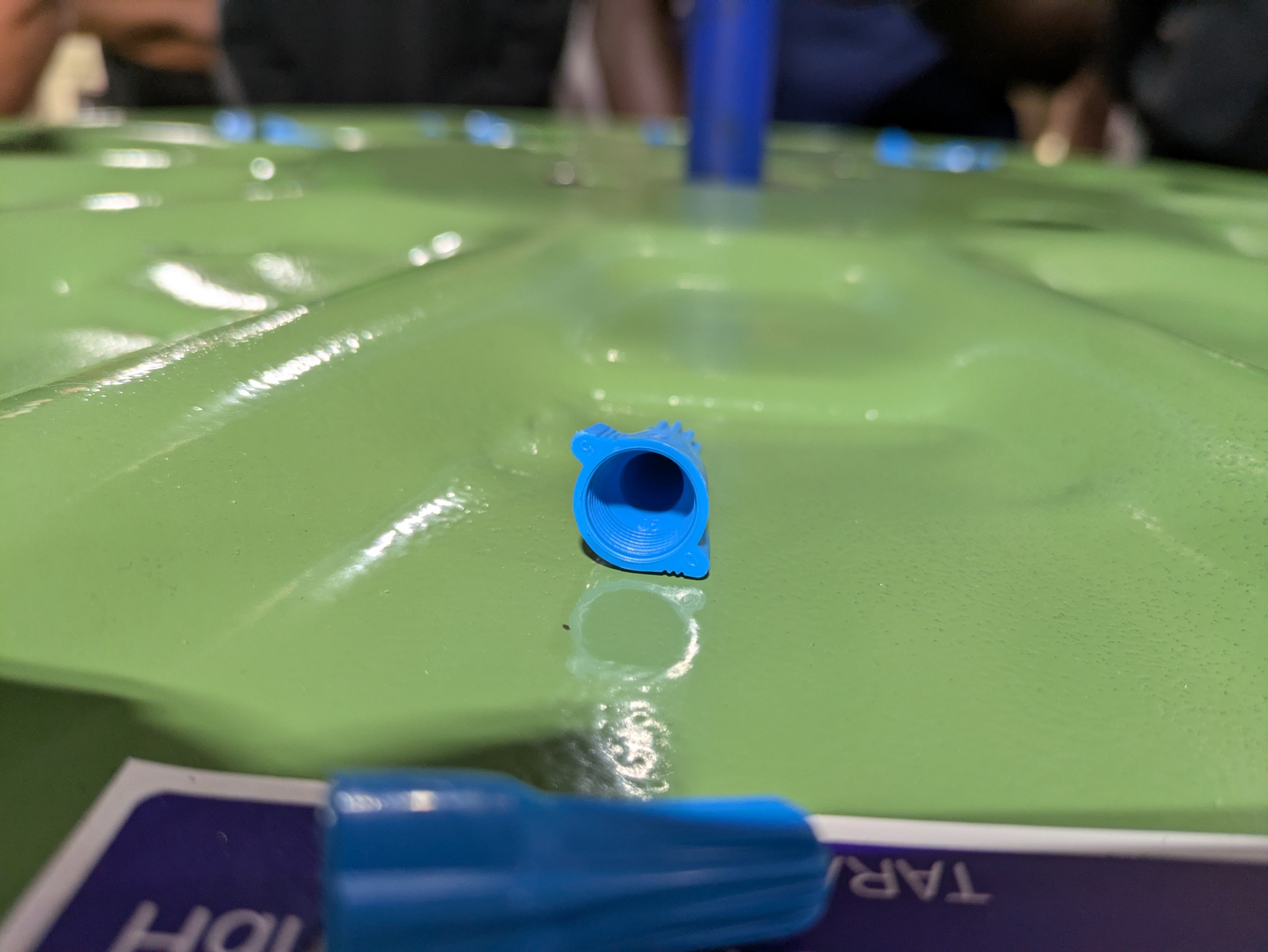
A blue wire nut that has just been molded, without the spring inside of it yet
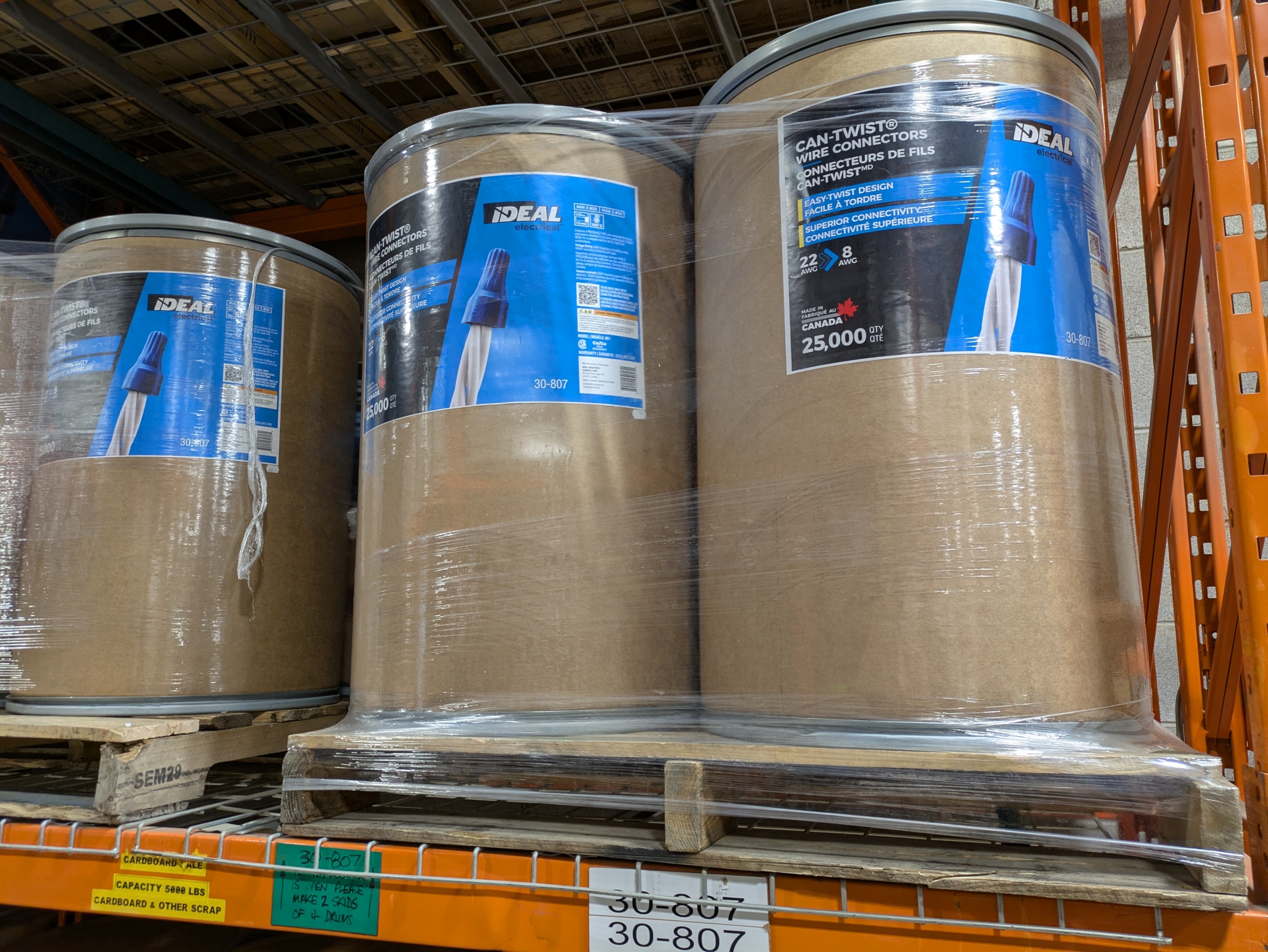
Giant bins with 25,000 blue wire connectors
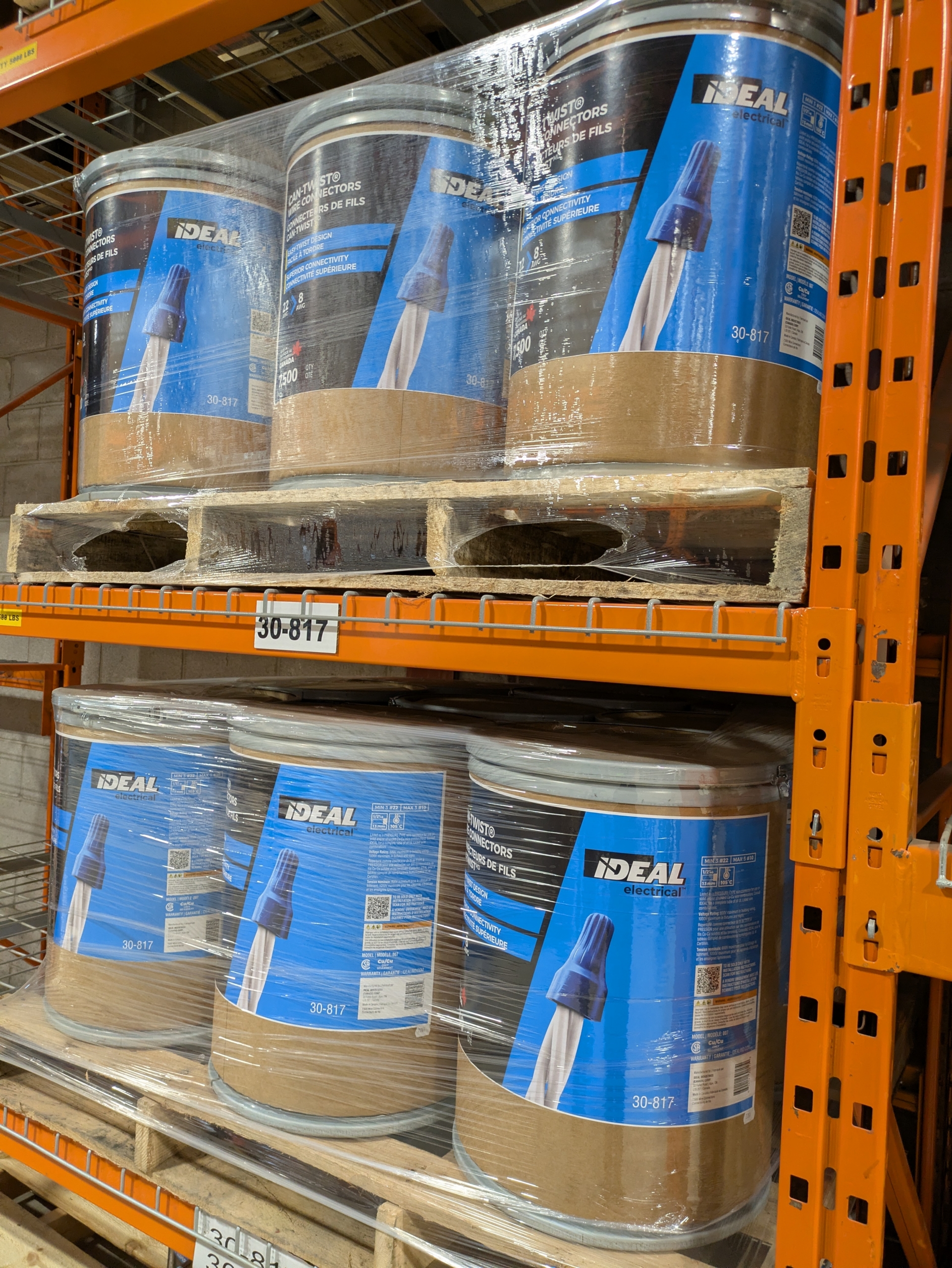
“Stubby” bins of 7,500 blue wire nuts
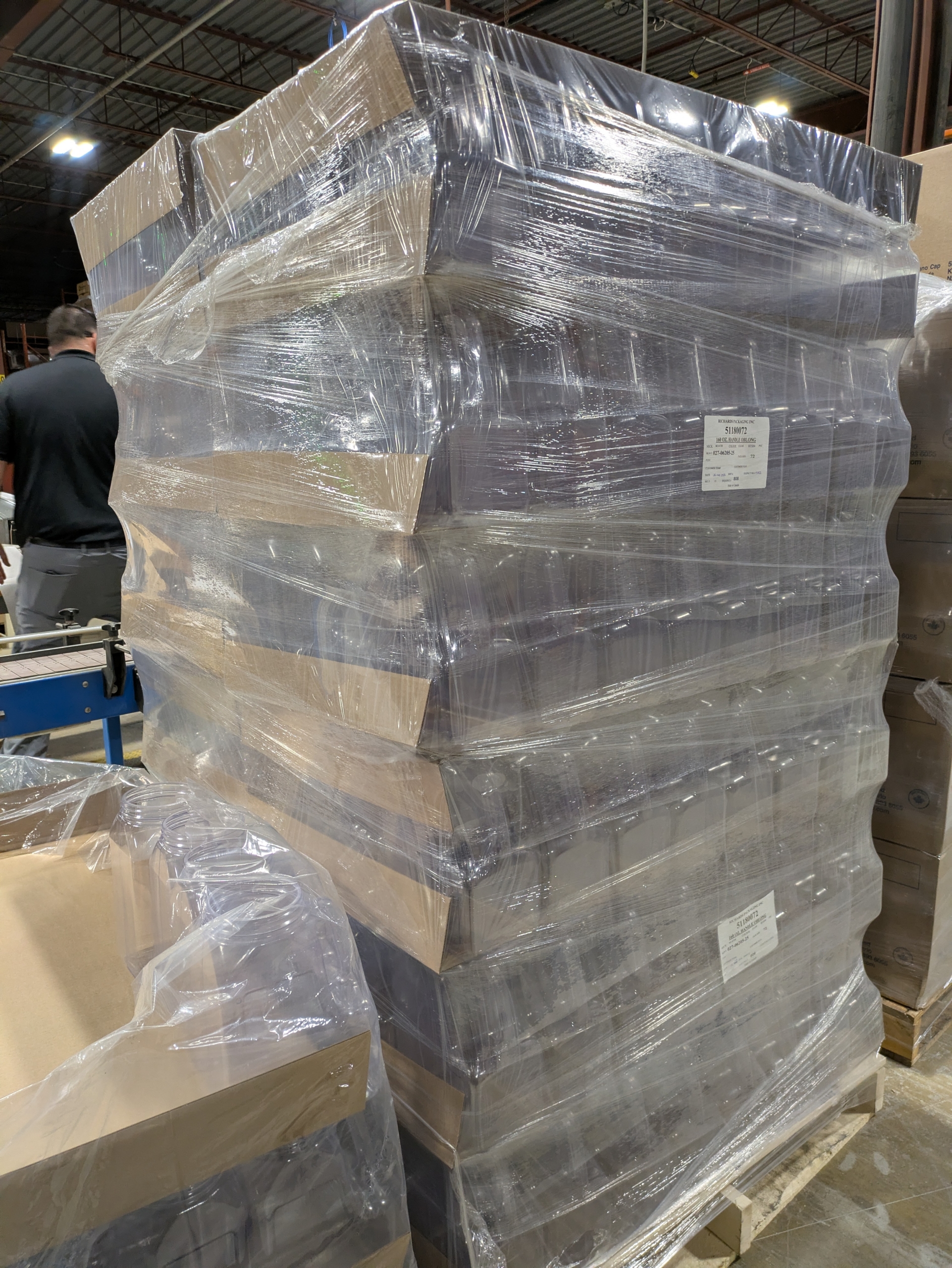
Empty jars for packaging wire nuts
The jars that the wire nuts get packaged into have a handle and a wide-mouth lid. The tour guide was telling us that on job sites, electricians would walk by one of the bins with an empty jar and dip it in to collect a full jar of wire nuts for a day’s work… like they’re buying nuts at Bulk Barn, but instead it’s wire nuts!
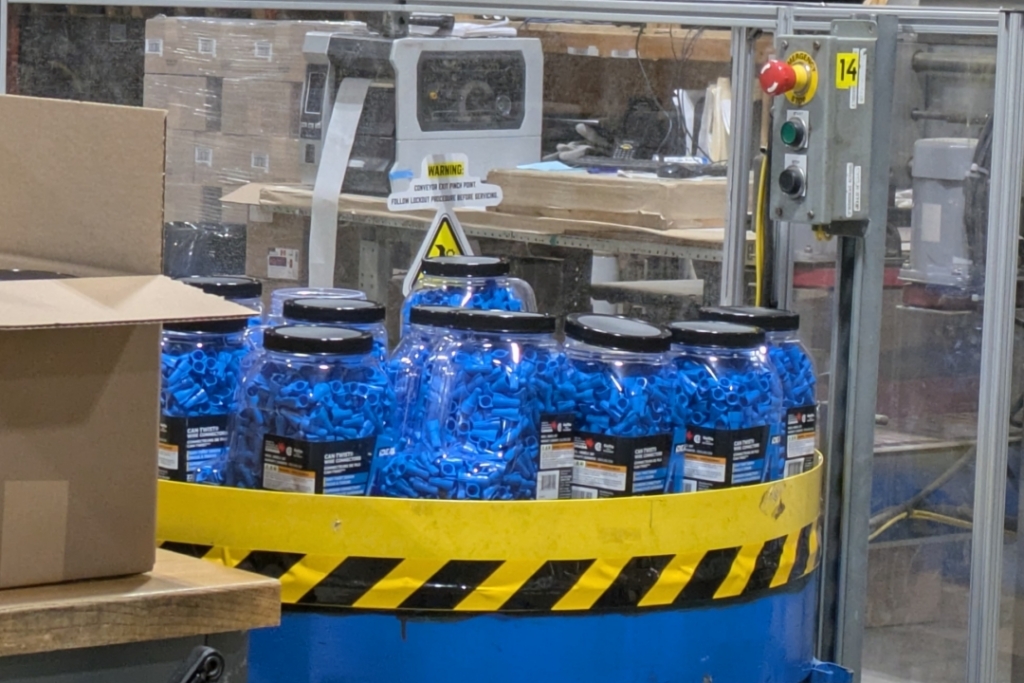
Wire nuts packaged in jars
Steel from Austria
IDEAL Electrical imports its steel from Austria because of its unique shape that makes it easier to dig into the wires to ensure a strong connection. From all the giant empty metal spools in the warehouse with stickers on them, it looks like they get their steel wire from a company called Pengg GmbH. Their website reads the following in English:
We are an Austrian based company with world-wide focus, specialized in the manufacture of wire for highest stressed springs and other components of the automotive, electronics and mechanical engineering industries.
It sounds like a high-quality material. I admire the high attention to detail that IDEAL puts into its wire connectors. When I become an electrician (if I get the opportunity for an apprenticeship, please contact me if you’re hiring new apprentices), then I’d definitely be looking to use their wire nuts. Quality and attention to detail are things I’ve prioritized in my career in software development, so it’s definitely something I plan on prioritizing in electrical if given the opportunity.
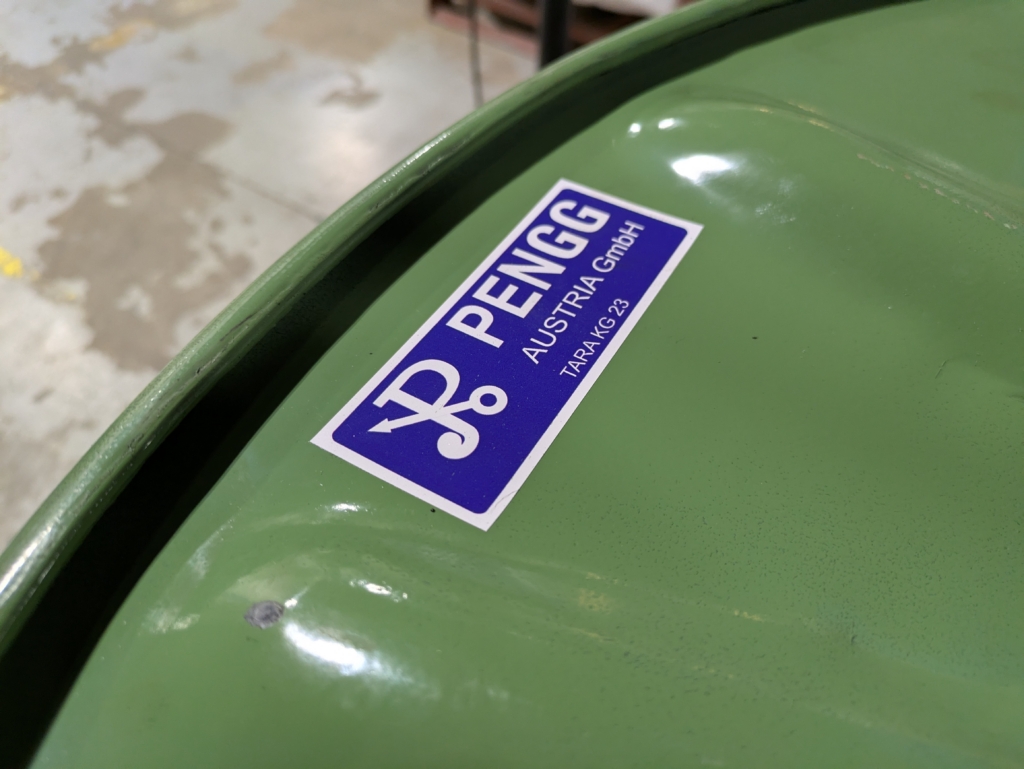
An empty spool of wire
Different connectors for different wires: Copper and aluminum
While aluminum wiring was used throughout the 60s and 70s thanks to its lower cost, most modern construction these days uses copper wiring. These days, copper wire is considered safer than aluminum wire due to the ends of aluminum wires being susceptible to oxidization, which can create excessive heat and impede the flow of electricity. These risks can, however, be mitigated by using oxide-inhibiting compounds and hiring an electrician who does high-quality work with aluminum.
If you have aluminum wiring, you need specific types of electrical devices for connecting to them, for example CO/ALR receptacles and light switches.
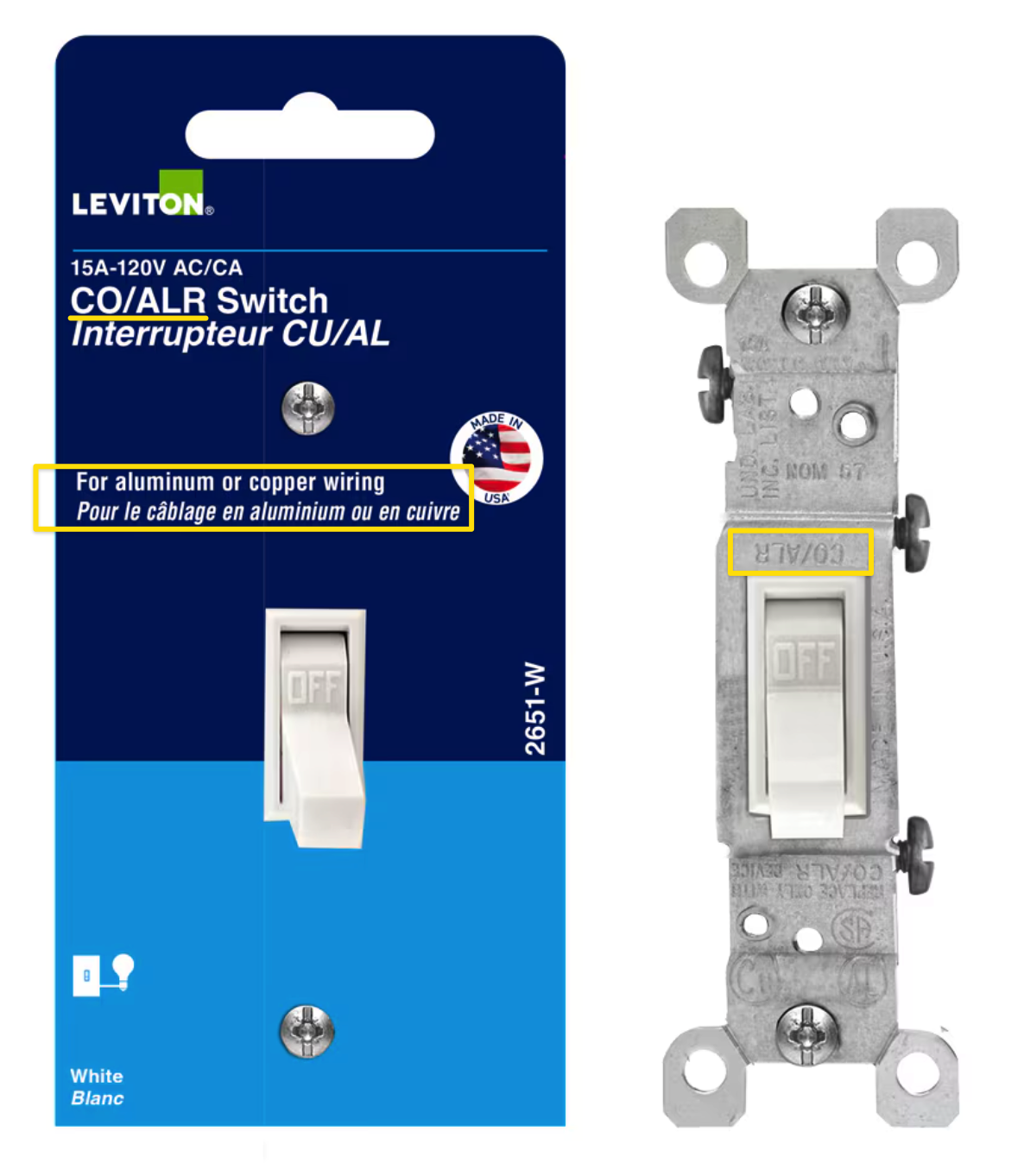
A CO/ALR light switch by Leviton for use with aluminum or copper wiring
The same applies for wire connectors—you need a special wire connector to join copper and aluminum wiring, and a quick peek at the IDEAL website shows me that they also have these available as a twisting wire nut.
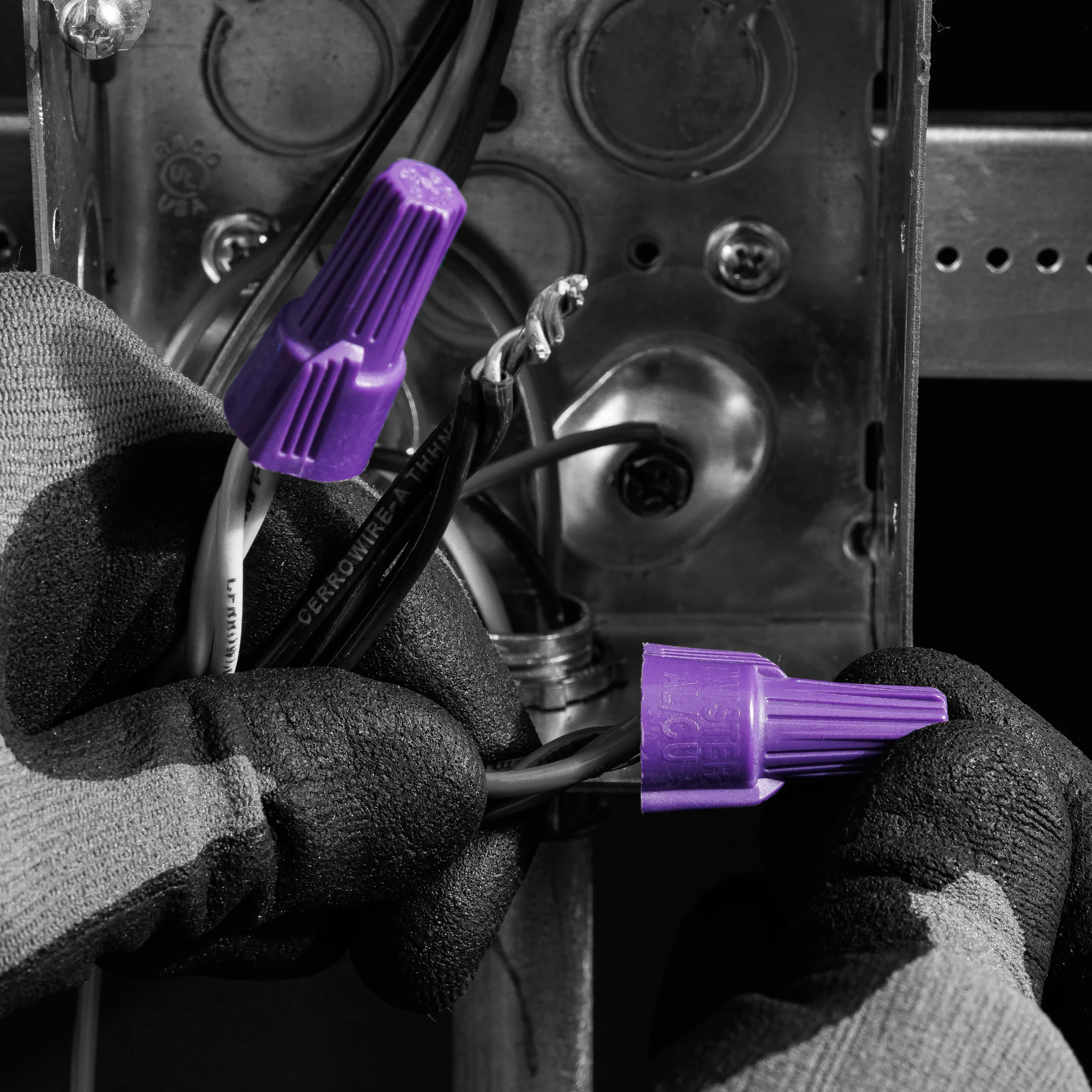
IDEAL Electrical AL/CU twisting wire nut
Lever connectors (don’t call them WAGO!)
Lever connectors, also called lever nuts, are for connecting wires, just like twisting wire nuts, but they work a bit differently.
If you’re like me and watch a bunch of electricians and DIY-ers on YouTube, then you might have heard of WAGOs, which is a lever connector. Their brand colour is orange. IDEAL also has lever connectors, but they’re different.
What do you think of WAGOs?
me, ignorantly
This was probably a forbidden question, like maybe asking Royale tissue and toilet paper makers what they think of Kleenex, or any manufacturer of inline skates what they think of Rollerblades. When a brand name for a product has become so popular for that product it becomes synonymous with the general class of the product, that’s called a generic trademark. On YouTube, WAGO was the only lever connector I had been exposed to, so I had referred to it similarly.
WAGO is a brand of lever connectors (or lever nuts). IDEAL has its own lever connector products.
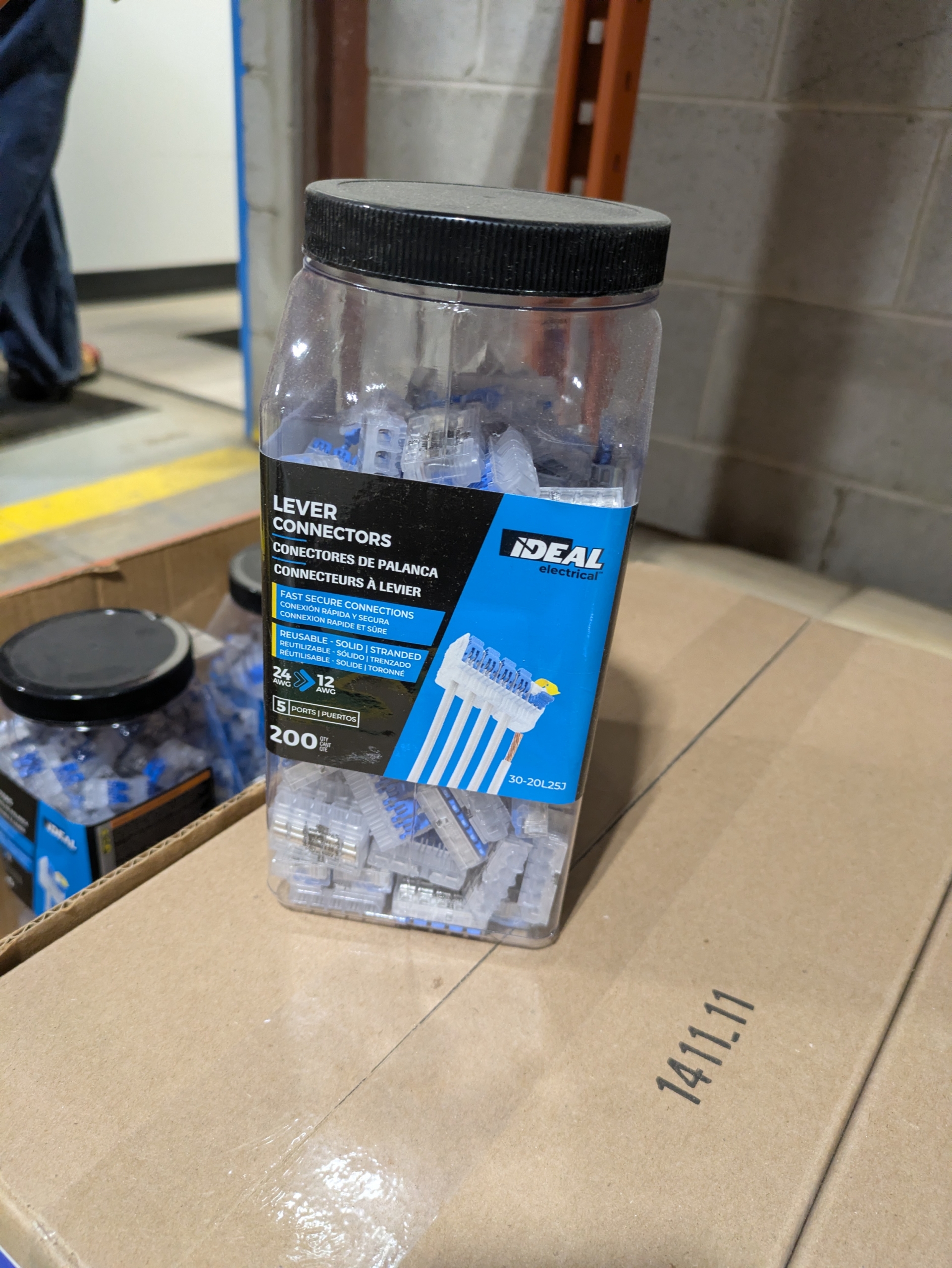
A plastic jar of IDEAL 5-port lever connectors
Another brand of wire connectors that has gained popularity enough to be used as a generic term for wire nuts is Marrette®. The staff at IDEAL also don’t like when you use that word as a generic term since the correct term is wire connectors or wire nuts and IDEAL and Marrette are both brands that create wire nuts. I did meet someone who referred to them as Marrettes and I had no idea what he was talking about. I did clarify that he was talking about the wire nuts.
Americans like assorted wire nuts, and bags instead of jars
A fun learning during the tour is that IDEAL Electrical in Ajax makes wire nuts for export into the United States, and that these American customers often prefer to buy their wire nuts in bags instead of jars, or in jars of assorted sizes. These assorted jars of wire nuts kind of look like candy going across the assembly line.
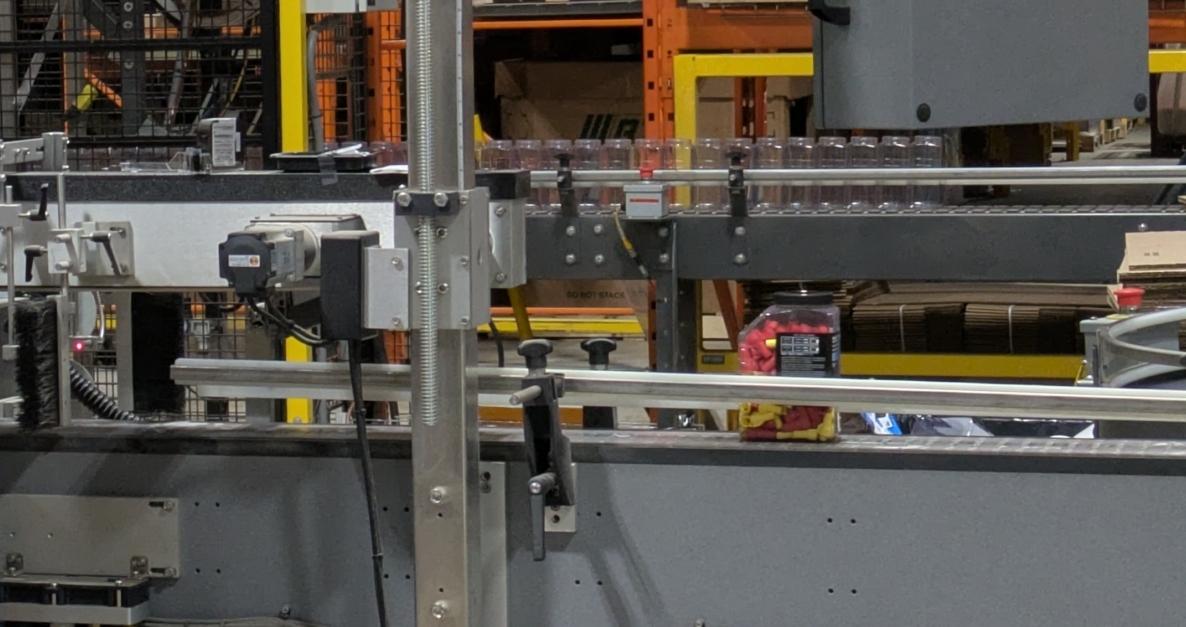
A jar of assorted red and yellow wire nuts being packaged
Conclusion
In conclusion, it was a very interesting site visit. I had a great time being able to tour the factory and learn about how wire connectors are manufactured. It was very interesting to learn about all of the importing and exporting that happens—they import steel from Austria, they export their products to China because it’s cheaper for China to import from Canada than it is for them to make it there (weird!). Really interesting stuff.
IDEAL Electrical were great hosts during the Tools in the Trades Bootcamp and showing us their workplace definitely allowed me to appreciate the work that goes into something that seems so simple.