
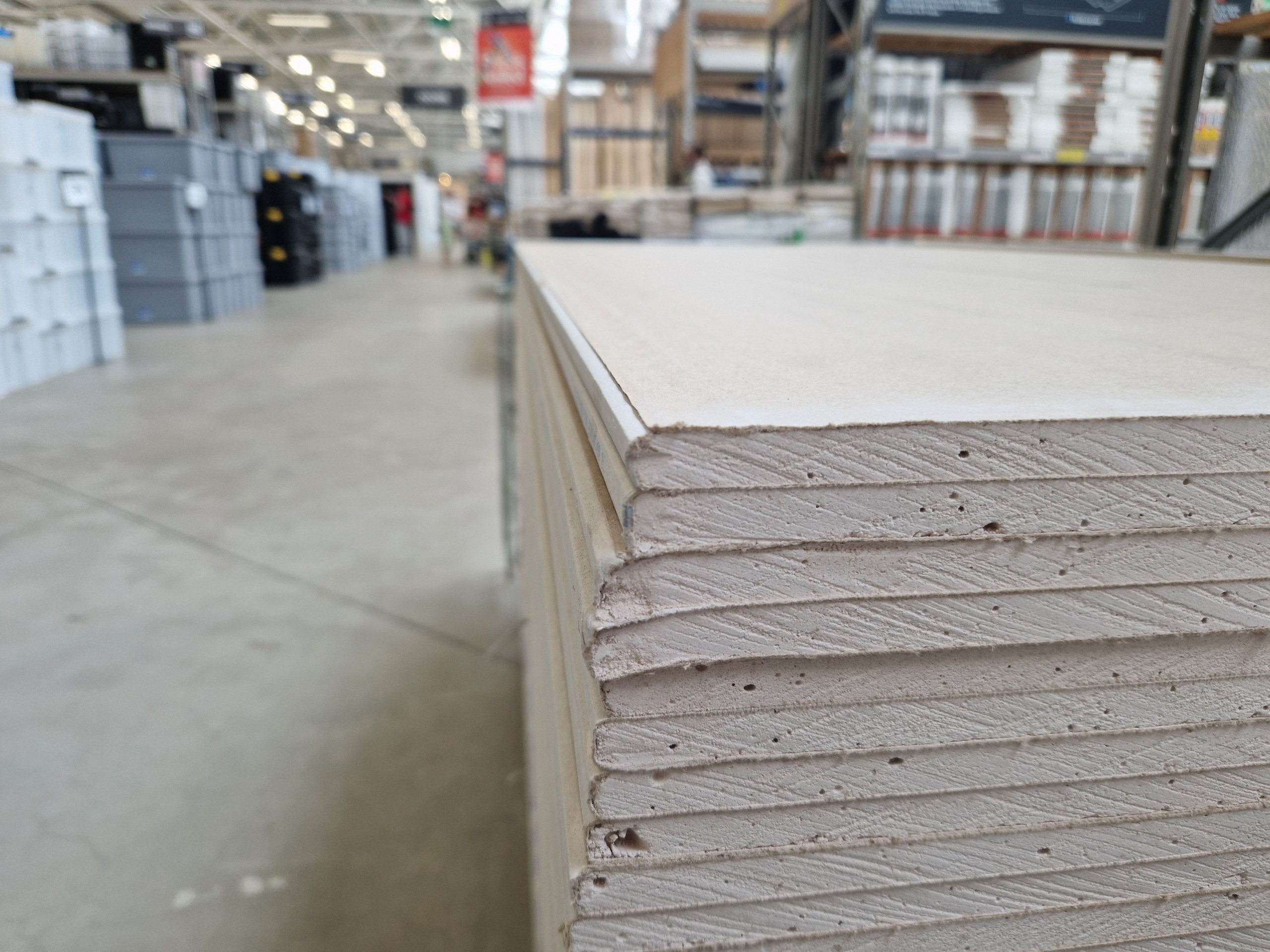
When I was mounting my TV into a concrete wall covered in drywall (which I explain in detail in this post), I needed to know the thickness of the drywall so I had an idea of how much I need to compensate for.
I started looking into the options for drywall thickness so this is a blog post of my learnings.
5/8″ drywall – the thickest and common commercial option
The thickest drywall option available is $\frac{5}{8}$”. This is used in commercial buildings like condos. For me, this is the drywall in my condo, including the interior walls as well as the party wall, which is the wall that adjoins to two units. This thicker drywall also helps reduce the travel of sound and the spread of fire.
This drywall is also ideal for ceilings as its thicker form will prevent it from sagging as much as thinner drywall.
$\frac{5}{8}$” drywall is used when studs are 24″ on centre, which means that they are spaced 24 inches apart, beginning calculations at the centre of each stud.
1/2″ drywall – common residential
Next one down in thickness is half-inch drywall. This is considered standard residential drywall.
$\frac{1}{2}$” drywall is used when studs are 16″ on centre, which means that they are spaced 16 inches apart, beginning calculations at the centre of each stud.
3/8″ drywall – tight areas
$\frac{3}{8}$” is fairly thin and can be used in spaces where thicker drywall would be too thin.
1/4″ drywall – the thinnest, for covering
$\frac{1}{4}$” drywall is the thinnest available and is very bendy. This is primarily used only to cover existing surfaces, for example, uneven plaster walls.
Because it’s bendy, it can be used for curved walls.
A diagram of drywall thickness
Here’s a diagram I made with web technologies. I’m showing the fractional values.
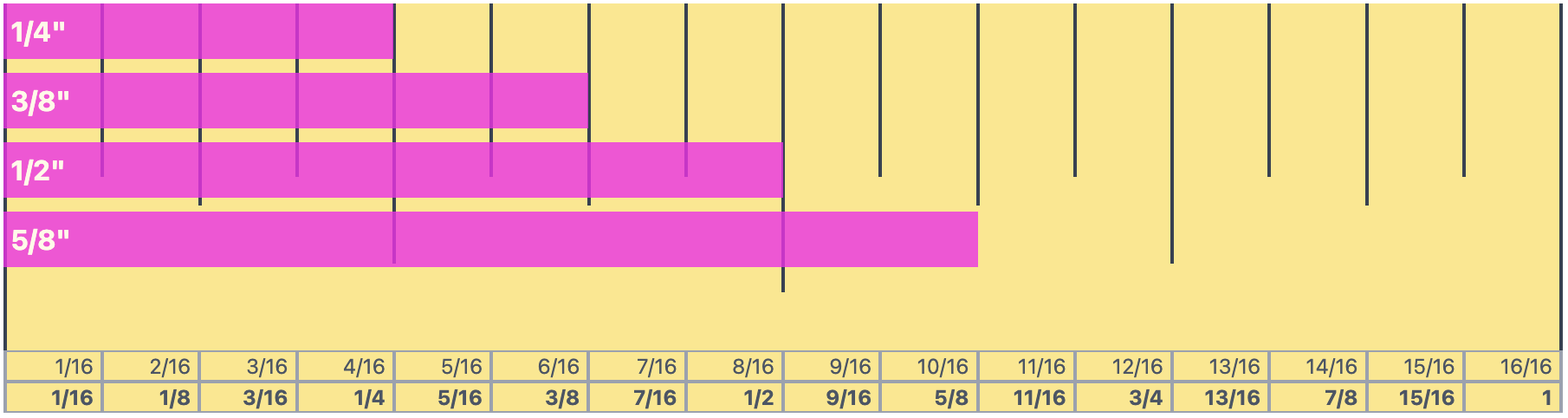
Drywall thickness displayed with a $\frac{1}{16}$ of an inch
If you’re like me and find it takes a while to reduce your fractions and appreciated the sixteenths displayed in the above diagram, you might like my rant about how the metric system is better.