
Recently I mounted my TV into concrete. You can read about that here.
One of the final steps was to drive long lag screws into a concrete anchor. I used a power drill for this task and it created a lot of resistance, which can result in the power drill spinning your wrist if you are not bracing the drill to prevent it from spinning.
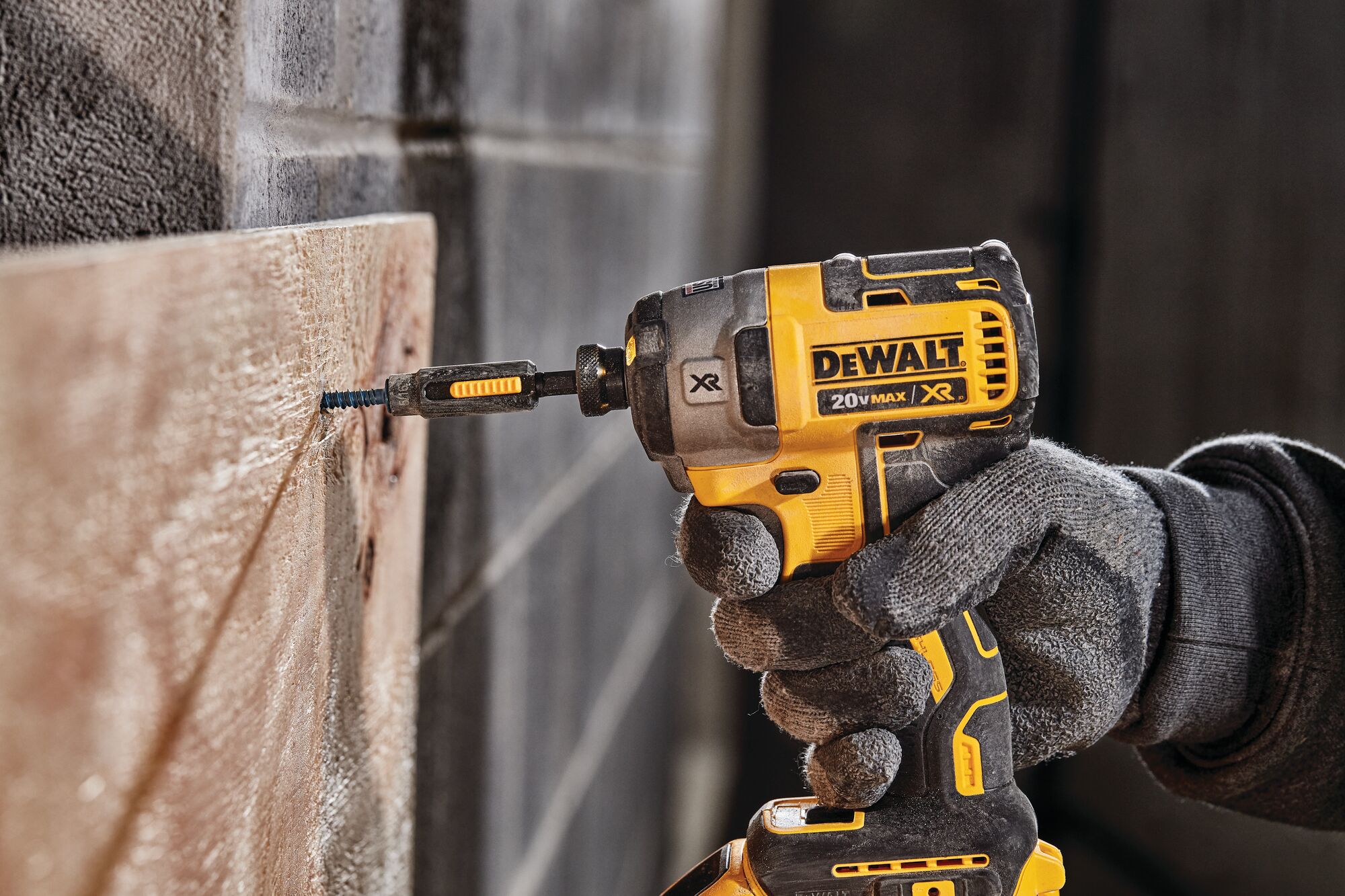
Impact drivers, however, drive screws a lot more easily than power drills. This is because they produce short bursts of high torque. A power drill has a constant amount of torque. The extra torque allows it to drive screws more effectively. If I had an impact driver, this would’ve been the perfect time to use one.
I rarely perform this task, but if I were to do it more regularly, I would use an impact driver.
I thought about putting this post under my Tools category but decided that it made the most sense under Safety. Choosing the right tool can help you avoid an unexpected injury. I wasn’t anticipating the resistance and for the drill to begin spinning. Thankfully I am not heavy on the trigger finger so I was able to stop and adjust my bracing.
It’s important to note that an impact driver isn’t suitable for all applications, but a proper bracing grip on a power drill, as well as choosing an impact driver for this task, can prevent wrist injuries when driving screws in supported materials.